Drills & Weaknesses
Drills built from your own mistakes.
No generic course. Every blunder you make becomes a named weakness and a spaced-repetition drill that comes back until you stop repeating it — so your practice is always about the mistakes that actually cost you games.
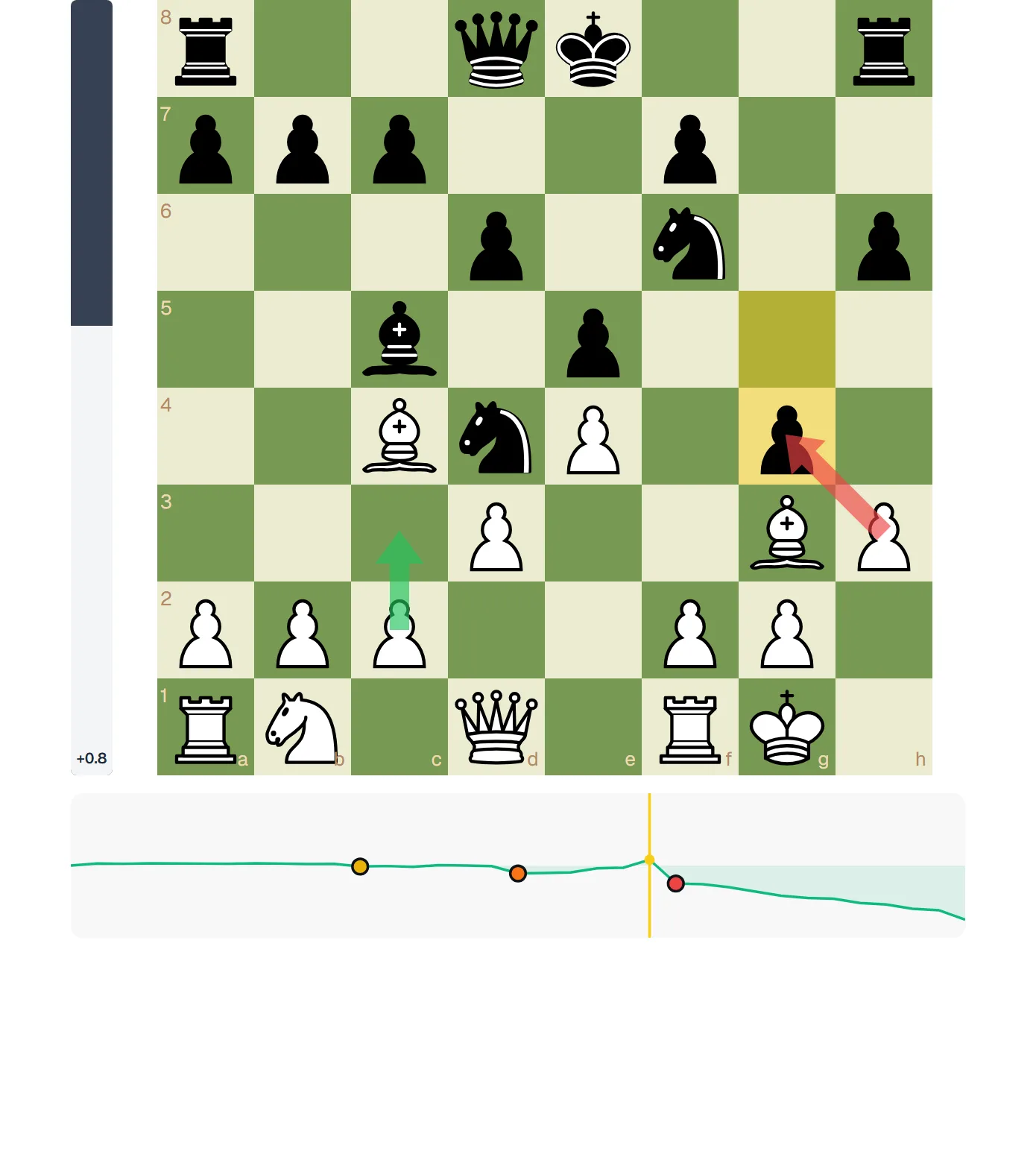
Every blunder is caught on the board — then it becomes a drill.
How the loop works
- You blunder. A review catches it and explains why.
- It becomes a named weakness — “hanging pieces to forks,” not just “a mistake.”
- You get a drill built from that exact pattern.
- It comes back on a schedule — spaced repetition — until you’ve mastered it.
Your mistakes, not generic ones
A puzzle course gives everyone the same problems. But your weaknesses aren’t everyone’s. We pull from a library of 250,000+ tactics and target the exact patterns you miss, so every minute of practice is spent where it actually moves your rating. It’s the practice half of how to improve at chess.
Common questions
How are the drills chosen?
They come from your own games. When a review finds a mistake, it’s tagged with the pattern behind it, and you get drills on that pattern — reinforced with similar puzzles from a 250,000-position library.
What is spaced repetition in chess?
It’s a schedule that brings a pattern back just as you’re about to forget it — the same method language apps use. Applied to your chess weaknesses, it makes fixes stick instead of fading after a day.